


Übersicht: Warum die Preise für Waschmaschinen volatiler sind
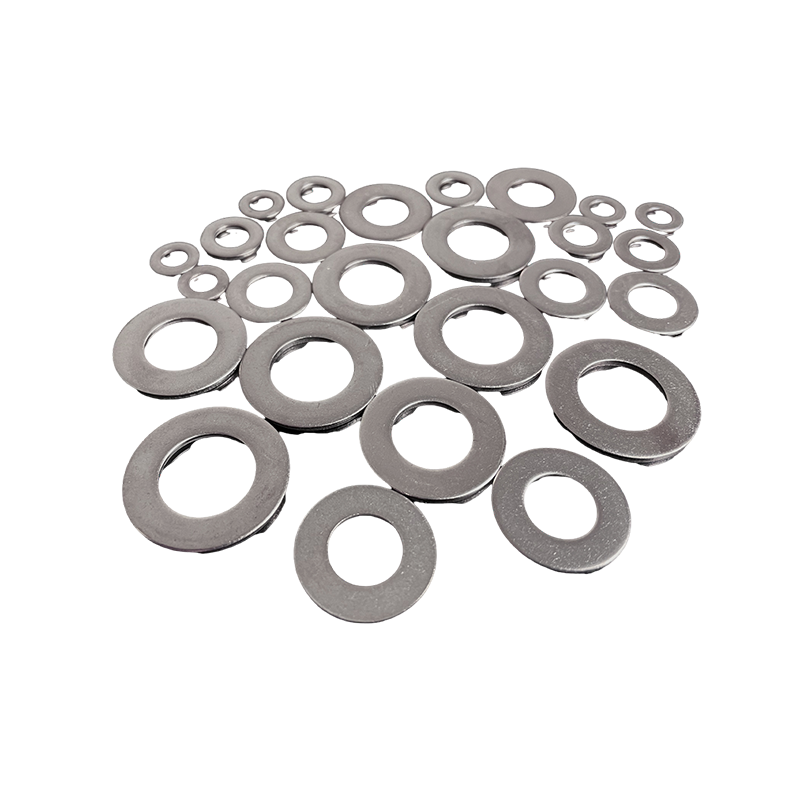
Unterlegscheiben aus Edelstahl are a low-margin, high-volume commodity whose price is determined not just by sheet or coil prices but by an interplay of feedstock costs, regional mill margins, freight and lead-time risk, and demand from construction, automotive and industrial OEMs. Recent years have shown that even modest moves in nickel, ferrochrome or scrap can transmit rapidly into washer quotes because thin-gauge processing and precision stamping add discrete unit costs that suppliers pass on quickly. This article breaks the main drivers into practical categories and ends with sourcing and inventory tactics for purchasers and suppliers. :contentReference[oaicite:0]{index=0}
Rohstoffbasis: Nickel, Chrom und Schrott
The most direct input to austenitic stainless (e.g., 304/316) is nickel and chromium content. Nickel price swings influence 300-series mills' raw-cost; ferrochrome affects 200/400-series grades and alloy premiums. When nickel or ferrochrome spikes, mills raise coil prices and service centers widen spreads. Conversely, weak stainless demand in a regional market (for example a slowdown in construction) can lead to exporters discounting inventory — causing short-term price drops followed by tightness when inventories deplete. :contentReference[oaicite:1]{index=1}
Was Käufer beachten sollten
Track LME nickel and ferrochrome indices, stainless scrap prices, and regional mill premiums. For contract negotiations, index-link clauses tied to nickel or scrap are common; buyers without index protection risk abrupt increases. :contentReference[oaicite:2]{index=2}
Logistik-, Fracht- und Lieferzeitrisiko
Freight volatility and port congestion amplify price moves for commoditized parts like washers. Higher container rates or reduced sailings increase landed cost per kilogram, while longer lead times raise working-capital and safety-stock expenses. The impact is greatest for smaller buyers who cannot aggregate shipments: the per-unit freight share is higher and sudden rate spikes are harder to absorb. Recent UNCTAD and market analyses show that container costs and geopolitical routing issues have kept freight costs structurally above pre-crisis levels, which continues to transmit into import-dependent fastener prices. :contentReference[oaicite:3]{index=3}
Operative Hebel zur Reduzierung des Logistikrisikos
- Konsolidieren Sie Bestellungen nach Möglichkeit zu Vollcontainerladungen (FCL), um die Fracht pro Einheit zu senken.
- Nutzen Sie Dual-Sourcing zwischen inländischen und nahegelegenen regionalen Werken, um das Risiko von Lieferzeiten abzusichern.
- Verhandeln Sie Frachtzuteilungsklauseln in langfristigen Verträgen oder kaufen Sie in Niedrigpreismonaten Frachtkapazitäten vor.
Handelspolitik, Zölle und Regionalisierung
Trade measures and shifting sourcing strategies have become pronounced price drivers. Tariffs or antidumping duties push buyers toward local mills or alternate origins, where supply tightness may support higher prices even if global raw-material costs fall. In some markets, post-tariff reshoring has allowed domestic mills to secure higher blended margins, which feeds through into distributor and component prices. Buyers exposed to duty risk should explicitly model landed cost including potential tariff scenarios. :contentReference[oaicite:4]{index=4}
Nachfragezyklen und Bestandsdynamik für Waschmaschinen
Washers follow larger cyclical end-markets: construction, automotive, heavy equipment, electronics, and renewables. A surge in infrastructure spending or EV production raises demand for corrosion-resistant hardware; conversely, a slowdown in construction reduces stainless consumption. Because washers are produced in high volumes and small pack sizes, distributors often carry lower days-of-inventory relative to coils. That makes prices sensitive to sudden order uplifts or distributor stock-outs — situations where lead-time premiums appear quickly. Industry forecasts project steady growth in fasteners overall, but regional timing varies and creates transient tightness. :contentReference[oaicite:5]{index=5}
Inventartaktiken
- SKUs nach Kritikalität und Vorlaufzeit klassifizieren; Halten Sie einen höheren Sicherheitsbestand an Spezialqualitäten mit langem Vorlauf.
- Nutzen Sie Vendor Managed Inventory (VMI) für Hochgeschwindigkeits-SKUs, um Lieferschwankungen auszugleichen.
- Implementieren Sie nach Möglichkeit rollierende 90- bis 180-Tage-Prognosen, die an vertragliche Preisspannen gebunden sind.
Eine einfache Kostenaufschlüsselungstabelle (Beispiel)
| Komponente | Beispiel: % der Anschaffungskosten pro Einheit |
| Rohmaterial (Coil/Blech) | 55 % |
| Verarbeitung & Stempelung | 20 % |
| Verpackung, Prüfung, Qualitätssicherung | 5 % |
| Fracht und Zölle | 10 % |
| Händlermarge und Lagerkosten | 10 % |
Praktische Beschaffungsstrategien
Buyers and suppliers that survived recent cycles typically combine several actions: contract indexation to raw-materials, multi-sourcing with regional partners, flexible order batching, and active freight management. For engineered washers or plated/treated parts, move to make-to-order where possible to avoid inventory obsolescence. For commodity washers, lock in price bands for 3–6 months while allowing quarterly renegotiations tied to nickel/scrap. Suppliers should publish simple lead-time and surcharge schedules to reduce disputes. :contentReference[oaicite:6]{index=6}
Fazit: Rechnen Sie mit periodischer Volatilität, managen Sie es mit Daten
Globale Lieferkettenverschiebungen bedeuten, dass sich die Preise für Edelstahlwaschmaschinen weiterhin mit den Rohstoffindizes, den Logistikkosten und regionalen politischen Veränderungen verändern werden. Die effektivste Reaktion ist operativer Natur: bessere SKU-Segmentierung, bedingte Verträge, die das Rohstoffrisiko transparent aufteilen, Frachtstrategie und aktive Überwachung der Nickel-, Ferrochrom- und Schrottmärkte.

 Brücke Nr. 2, Chuangxin Road, Stadt Dainan, Stadt Xinghua, Stadt Taizhou, Provinz Jiangsu
  +86-17315333748(Wechat)
 +86-17315333748(Wechat/Whatsapp)

